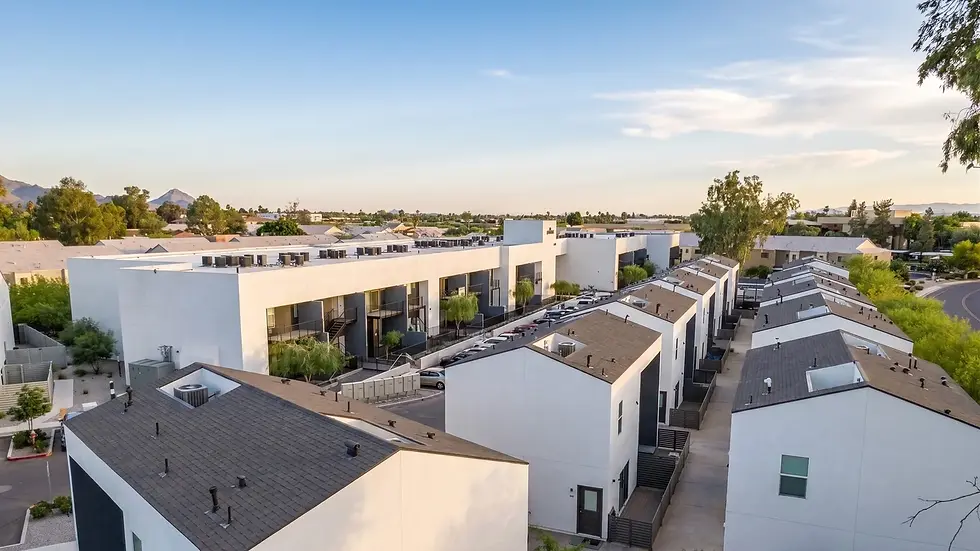
Lofts in Phoenix, Arizona: A Renter's Guide to Styles, Neighborhoods, Costs, and Trade-Offs
The word "loft" gets stretched to cover a lot of different apartments, and that makes shopping harder than it should be. One listing means a raw warehouse conversion with exposed brick and a freight elevator. The next means a regular one-bedroom with slightly taller ceilings and an open kitchen. Both call themselves lofts. If you're searching for lofts in Phoenix, Arizona, the first useful thing to know is which kind you're actually looking at, because the difference changes your rent, your comfort, and your day-to-day life.

This guide walks through what a loft really is, where to find them across the valley, what they cost, the trade-offs nobody puts in the listing, and how to tell a good one from a compromise. The Landon in North Phoenix shows up as one concrete example later, because it fits a specific kind of loft renter well. It is one option among many, and the goal here is to help you choose, not to sell you.
Quick answer: Lofts in Phoenix, Arizona come in two broad flavors. "Hard" lofts are converted industrial or commercial buildings, usually downtown, with tall ceilings, big windows, exposed structure, and quirks. "Soft" lofts are purpose-built apartments designed to feel loft-like, with open plans and high ceilings but modern systems. Expect roughly $1,300 to $2,600 a month depending on style, size, and neighborhood, with the industrial downtown units usually costing more per square foot.
Key takeaways
A "loft" in Phoenix can mean a true warehouse conversion or a new-build apartment styled to feel open and airy. Confirm which one before you fall for the photos.
Location drives the experience: Downtown and Roosevelt Row lean historic and walkable, while North Phoenix leans newer, quieter, and easier on parking.
Open plans trade privacy and sound control for light and space. Know your tolerance for noise and heat before you commit.
Cooling costs matter more here than almost anywhere. Tall ceilings and big glass are beautiful and can raise your summer power bill.
Check ceiling height, window exposure, HVAC age, parking, and storage in person. Photos flatter lofts more than any other apartment type.
What is a loft apartment, exactly?
A loft is an apartment built around open volume rather than a maze of small rooms, and in Phoenix it takes two main forms. The original meaning is a "hard loft," a home carved out of a former factory, warehouse, or commercial building. These keep the bones of the old structure: concrete or timber floors, exposed brick or ductwork, oversized industrial windows, and ceilings that can run 12 feet or higher. Phoenix has a real supply of these in and around its older commercial cores, thanks to decades of adaptive reuse in the downtown and historic warehouse districts.
The second form is a "soft loft," a purpose-built apartment designed to give you the open, airy feeling without the freight-elevator quirks. Soft lofts feature open floor plans, high ceilings, and big windows, but they come with modern plumbing, insulation, and climate control. Most "loft-style apartments" advertised across the valley, including in North Phoenix, are soft lofts.
The practical distinction: a hard loft sells you character and history and asks you to live with the compromises of an old building. A soft loft sells you the look and feel with fewer surprises. Neither is better. They suit different people.
Where to find lofts across Phoenix
Lofts cluster in a handful of Phoenix areas, and each one delivers a different daily life. Here is the honest lay of the land.
Downtown and Roosevelt Row. This is the heart of the hard-loft scene and the arts district. You get walkable galleries, coffee, First Friday crowds, light rail, and genuine warehouse conversions. You also get the highest per-square-foot rents, tighter parking, and more street noise. It fits someone who wants to walk out the door into a city.
Midtown and the Central corridor. A mix of older conversions and newer mid-rise buildings along Central Avenue, connected by light rail. Slightly calmer than downtown, still urban, with museums and the arts district a short ride away.
North Phoenix. Newer construction dominates here, so most lofts are soft lofts in modern communities. You trade downtown walkability for more space, easier parking, quieter streets, and better access to the I-17 and employment corridors. Rents tend to stretch further. Our fuller breakdown of the area lives in this guide to apartments in North Phoenix if you want to go deeper.
Scattered infill elsewhere. Tempe, the Camelback corridor, and pockets of the East Valley have loft-style buildings too, usually newer soft lofts attached to mixed-use developments.
If tall views and an elevator building appeal to you more than raw industrial character, it is worth reading how lofts compare with Arizona high-rise apartments before you decide.
What lofts actually cost in Phoenix
Loft pricing in Phoenix spans a wide band, and style plus location explain most of the spread. As a rough guide for 2026, a soft loft or loft-style one-bedroom in a newer North Phoenix or suburban community often starts in the mid-$1,000s to around $1,900 a month. A converted hard loft downtown or on Roosevelt Row commonly runs $1,800 to $2,600 or more, and larger two-level units climb higher. Studios and smaller open plans sit at the lower end. Two-bedroom lofts and premium conversions sit at the top.
A few cost factors specific to lofts are worth naming:
Per-square-foot premium downtown. You pay for character, walkability, and scarcity. The same rent buys noticeably more space a few miles north.
Utilities run higher than the square footage suggests. Tall ceilings and large windows are wonderful and they cost more to cool. Arizona already has some of the country's highest home cooling demand, and the U.S. Energy Information Administration tracks how much of a typical Arizona electric bill goes to air conditioning. Ask for average summer utility figures before you sign.
Parking and pet fees. Downtown parking is often extra and limited. Newer communities usually fold garage or covered parking in and post pet policies clearly.
What to look for before you sign
The best way to judge a loft is in person, because photos flatter open spaces and hide the things that matter. Walk the unit with this checklist.
Ceiling height and how it feels. Nine feet reads as generous and open. Twelve-plus feels dramatic. Confirm the real number rather than trusting a wide-angle photo.
Windows and sun exposure. West-facing glass bakes in Phoenix afternoons. North and east exposures stay more comfortable. Ask which way the big windows face.
HVAC age and cooling. In a converted building especially, ask how old the system is and whether tall ceilings are cooled evenly. This is the single biggest comfort variable here.
Sound transfer. Open plans and hard surfaces bounce noise. Listen for neighbors, street traffic, and mechanical hum. Concrete floors are gorgeous and they echo.
Storage and closets. Open living often means fewer closets. Measure whether your things will fit.
Parking and access. Where do you park, is it covered, and what does it cost? For hard lofts, check elevator and stair access for move-in day.
The written details. Get the fees, pet policy, and lease terms in writing before you decide.
Lofts vs the alternatives: a quick comparison
Lofts are one point on a spectrum. If you are weighing an open loft against a standard apartment, a high-rise unit, or a townhome, this table lines up the trade-offs that actually differ.
Feature | Hard loft (conversion) | Soft loft (new-build) | Standard apartment | Townhome |
|---|---|---|---|---|
Ceiling height | Very tall (often 12 ft+) | High (roughly 9–11 ft) | Standard (8–9 ft) | Standard, multi-level |
Character | Industrial, historic | Modern, open, airy | Conventional | Home-like, private |
Sound privacy | Lower (hard surfaces) | Moderate | Higher | Highest |
Cooling predictability | Varies with old systems | Newer, more efficient | Efficient | Efficient |
Typical location | Downtown / arts district | North Phoenix / suburbs | Everywhere | Newer communities |
Parking ease | Often tight | Usually included | Usually included | Usually included |
The Landon: a loft-style option in North Phoenix
If a soft loft in a quieter, newer setting is what you want, The Landon is one community that fits that description, so here is the concrete picture. The Landon offers one and two bedroom loft-style apartments in North Phoenix at 8125 N 23rd Ave, with ceilings running roughly 9 to 11 feet depending on the home. Apartments start at $1,645 a month. The finishes lean toward the modern, open feel loft renters are after: solid wood barn doors, high-end appliances, and a full-size in-unit washer and dryer, so you get the airy look without the freight-elevator compromises of a true conversion.
Beyond the units, the community includes The Landon Lounge, a pool and sundeck, a 24/7 fitness center, and gated underground parking with more than 20 EV charging spots, which answers the parking question that trips up a lot of downtown loft shoppers. It is a pet-friendly community with a large dog and walking park right next door. Daily trash valet and high-speed wifi are included, and applications get one-minute approvals. If you need more room than an open loft gives, the same community also offers one, two, and three bedroom single-family-style rental homes and townhomes.
You can compare layouts and current pricing on the floor plans page, or schedule a tour to walk a unit and check the ceiling height, light, and sound for yourself. Phone is 480-572-0006. Whether The Landon is right for you or not, seeing a loft in person is the step that settles the decision.
Frequently asked questions
Are lofts a good idea in the Phoenix summer heat?
They can be, as long as the cooling is up to the job. Tall ceilings and large windows are the signature loft features and also the ones that raise cooling demand, so the deciding factor is HVAC quality and window exposure. Newer soft lofts with efficient systems and shaded or north-facing glass handle Phoenix summers well. Ask for typical summer utility costs before you commit.
Do loft apartments in Phoenix usually come furnished?
No, most do not. The large majority of lofts for rent in Phoenix are unfurnished long-term leases, the same as standard apartments. Furnished lofts exist mainly in short-term and corporate-rental listings and cost more per month. If a listing shows staged furniture, confirm in writing whether any of it stays.
What is the difference between a loft and a studio?
A loft is defined by open volume and height, while a studio is defined by combining living and sleeping in one room regardless of ceiling. A studio is usually small and standard-height. A loft can be a large one or two bedroom with tall ceilings and big windows. Some units are both, a studio-sized open loft, but the words are not interchangeable.
Are lofts noisier than regular apartments?
Often, yes, because open plans and hard surfaces like concrete and brick reflect sound instead of absorbing it. You hear more from within your own unit and sometimes from neighbors and the street. Rugs, curtains, and soft furniture help a lot. If quiet matters to you, visit at a busy time of day and listen before you sign.
Can I find pet-friendly lofts in Phoenix?
Yes, plenty of Phoenix loft communities welcome pets, though policies on breed, weight, and fees vary by property. Newer communities tend to post their pet rules clearly and some include dog parks or walking areas on site. Always confirm the specific policy in writing, since "pet-friendly" can still carry limits.
Do lofts cost more than standard apartments in Phoenix?
Sometimes, especially converted hard lofts downtown, which carry a per-square-foot premium for character and location. Soft lofts in newer suburban and North Phoenix communities are frequently priced in line with, or only slightly above, comparable standard apartments. The bigger hidden cost with any loft is usually utilities, not rent, so factor cooling into your budget.
Is a loft a good fit if I work from home?
It depends on how you use sound and space. Lofts give you room and light that make a home office pleasant, but the open plan means fewer walls to close a door on video calls or noise. A one or two bedroom loft with a separate bedroom you can convert works better for remote work than a fully open single-space unit. Consider your call schedule and whether you live alone.
*Equal Housing Opportunity. The Landon is an equal housing opportunity provider. We do not discriminate on the basis of race, color, national origin, religion, sex, familial status, disability, sexual orientation, gender identity or expression, or source of income, in accordance with the federal Fair Housing Act and the City of Phoenix Human Relations Ordinance. Every applicant is evaluated individually under the same written criteria.*