Arizona High-Rise Apartments: A Renter's Guide to Towers, Views, Costs, and Trade-Offs
If you're searching for Arizona high-rise apartments, you're probably picturing a specific kind of life: a unit up on the tenth floor, floor-to-ceiling glass, a rooftop pool, and the lights of Phoenix or Tempe spread out below you. That version exists here, and it can be great. It also comes with real trade-offs that the glossy listing photos tend to skip.

This guide walks through what a high-rise actually is, where you'll find them across Arizona, what they cost, and the honest pros and cons, so you can decide whether a tower is the right fit or whether a lower-rise community gets you most of the same perks for less. We'll use The Landon in North Phoenix as one example of that second path later on, but the goal here is to help you choose well no matter where you land.
Quick answer: Arizona high-rise apartments are concentrated in a handful of walkable urban cores, mainly downtown and midtown Phoenix, Tempe near ASU and Town Lake, and Old Town Scottsdale. They offer views, amenities, and walkability, usually at a premium price per square foot and with less private outdoor space. Rents for a high-floor one-bedroom commonly run from the high $1,000s to well over $2,500 a month depending on the building and city.
Key takeaways
True high-rise living in Arizona is a city-core product: downtown/midtown Phoenix, Tempe, and Scottsdale hold most of the towers, so location and lifestyle come bundled with the height.
You mostly pay for views, amenities, and walkability, and you usually give up square footage, private outdoor space, and easy pet access to get them.
Cooling costs and floor position matter more here than in most states, since a west-facing high floor bakes in an Arizona summer.
A mid-rise or loft-style community can deliver the pool, fitness center, and modern finishes at a lower price per square foot, which is worth pricing out before you commit.
What is a high-rise apartment (and what counts as one in Arizona)?
A high-rise apartment is a rental unit in a tall, elevator-served building, generally seven stories or more, though definitions vary. Buildings in the roughly four-to-six-story range are usually called mid-rise, and anything from a house up to three stories is low-rise or garden-style. The line matters because construction type changes with height: taller towers use steel and concrete, which affects soundproofing, elevators, parking, and the amenity fees you'll be asked to pay.
In Arizona, "high-rise" almost always means an urban infill building. You will not find scattered towers in the suburbs. They cluster where cities have zoned for density and where enough people want to pay for walkability, which keeps the true high-rise inventory smaller than newcomers expect.
Where Arizona's high-rise apartments actually are
High-rise rentals in Arizona are concentrated in a few areas, each with its own personality:
Downtown and midtown Phoenix. The largest cluster, running along the Central Avenue corridor and around Roosevelt Row. You're near the light rail, sports and concert venues, and a growing restaurant scene. Phoenix is one of the fastest-growing large cities in the country, according to the U.S. Census Bureau, and much of the new vertical housing has landed here.
Tempe. Dense, young, and walkable, anchored by Arizona State University and Tempe Town Lake. Expect steady rental demand, nightlife, and premium pricing near Mill Avenue.
Scottsdale. Old Town Scottsdale and the Camelback corridor lean upscale, with resort-style finishes and rents to match.
Tucson. A smaller downtown high-rise scene, mostly tied to the University of Arizona and the arts district.
If a walkable downtown is the whole point for you, a tower makes sense. If you mainly want the luxury finishes and amenities, you have more geography to work with, and that's where the price math opens up.
What high-rise living in Arizona is really like
Here's the honest ledger. The upsides of a high-rise are real:
Views and light. A high floor with a mountain or skyline view is genuinely hard to replicate anywhere else.
Amenities on site. Rooftop pools, sky lounges, package rooms, sometimes a concierge or controlled-access lobby.
Walkability. Restaurants, transit, and events at street level, often without needing to drive.
The trade-offs are just as real, and a few are specific to the desert:
Cooling costs and floor position. A west- or south-facing unit on a high floor takes the full afternoon sun. Cooling is the biggest slice of a summer utility bill in this climate, and the U.S. Energy Information Administration tracks how much of home energy use goes to air conditioning. Ask which direction the unit faces and what recent summer bills looked like.
Space and price per square foot. Tower units tend to be smaller and cost more per square foot than a comparable low-rise home.
Pets and outdoor access. A dog on the fourteenth floor means an elevator trip every time. Private yards and ground-level dog runs are rare in true high-rises.
Parking and fees. Garage parking is often an add-on, and amenity or "common area" fees can stack onto the base rent.
Noise and elevators. Downtown means street noise, and a single bank of elevators can mean a wait during busy hours.
Roughly what you'll pay
High-rise rents in Arizona sit at the upper end of the local market. A high-floor one-bedroom in downtown Phoenix or Tempe commonly runs from the high $1,000s into the $2,500-plus range, and Scottsdale towers push higher. Two bedrooms and premium view floors climb from there. On top of base rent, budget for parking, amenity fees, and higher summer electric bills. Always ask for the all-in monthly number, rather than the advertised rent alone, because the extras add up fast in a tower.
For comparison, a well-appointed mid-rise or loft community outside the densest cores often delivers similar finishes and amenities at a lower starting rent, which is the trade many renters make once they run the numbers. Our guide to apartments in North Phoenix breaks down how neighborhood choice changes the price.
High-rise tower vs. loft-style community: an honest comparison
What you're weighing | Urban high-rise tower | Loft-style / mid-rise community |
|---|---|---|
Views | High floors, skyline or mountain | Ground-to-mid level, neighborhood outlook |
Square footage per dollar | Lower (you pay for the view) | Higher (more room for the rent) |
Private outdoor space | Rare, usually a small balcony | More common, including patios and yards |
Pet logistics | Elevator trips, few dog areas | Ground-level access, on-site or nearby dog park |
Parking | Often a paid garage add-on | Frequently included or gated on site |
Walkability | Strong in a downtown core | Depends on the neighborhood |
Typical starting rent | Higher | Lower |
Neither column is "better." The right pick depends on what you value more: the downtown lifestyle, or the space and value of a lower-rise home.
What to look for before you sign
Whether you tour a tower or a low-rise, run the same checklist:
Ask which way the unit faces and request recent summer utility figures.
Get the true monthly cost with parking, amenity, pet, and trash fees included.
Test the elevators and hallways during a busy hour, not a quiet midday tour.
Check pet rules and the nearest place to walk a dog if you have one.
Read the amenity fine print. A rooftop pool you pay for but never use is just rent.
Confirm the application process and timeline so you're not guessing.
Where The Landon fits in the picture
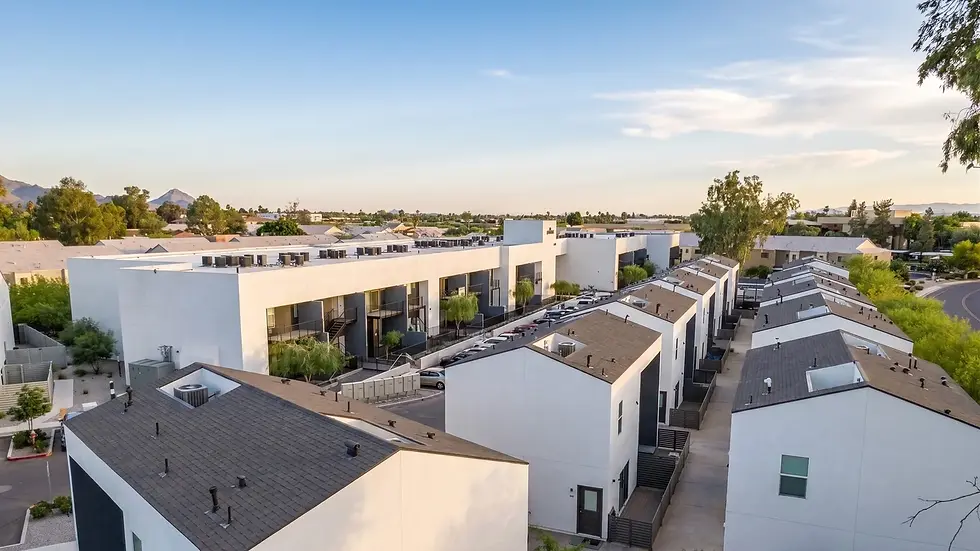
The Landon is worth a look if you love the high-rise idea, the pool, the fitness center, the modern finishes, but you'd rather keep your square footage, your parking, and easy access to the outdoors. It sits at 8125 N 23rd Ave in Phoenix, AZ 85021, in North Phoenix, and it's built as attainable luxury rather than a downtown tower.
The homes are loft-style one and two bedroom apartments, plus one, two, and three bedroom luxury townhomes, with apartments starting at $1,645 a month. You can browse the layouts on the floor plans page, or, if you want more room and a townhome feel, see the single-family rental homes.
On amenities, it covers most of what draws people to a tower and adds a few things towers struggle with:
The Landon Lounge, a pool and sundeck, and a 24/7 fitness center
Gated underground parking with 20-plus EV charging spots, so parking isn't a nightly hunt
A large dog and walking park right next door, which solves the high-rise pet problem at ground level
In-unit full-size washer and dryer, daily trash valet, high-speed wifi, 9 to 11 foot ceilings that vary by home, solid wood barn doors, and high-end appliances
It's also pet-friendly, and applications come with one-minute approvals, with each application reviewed individually. If a past eviction is part of your history, applicants with one are welcome and reviewed case by case. You can schedule a tour or ask a straight question through the community's site or by calling 480-572-0006.
Is it a high-rise? No. It's the lower-rise alternative many renters choose once they've priced a tower and thought about the day-to-day of living in one.
Frequently asked questions
Are high-rise apartments a good idea in Arizona's heat?
Yes, a high-rise can be a good idea in Arizona's heat, as long as you pick the right unit. Height itself is fine, but sun exposure is the variable that matters. A west-facing high floor absorbs the full afternoon sun and costs more to cool, so ask about orientation, window shading, and past summer utility bills before you decide. A north- or east-facing unit is usually the more comfortable, cheaper-to-run choice.
Do Arizona high-rises hold up during monsoon season?
Yes. Modern high-rises are engineered for high winds and heavy rain, and Arizona is a low-seismic region, so earthquakes aren't a practical concern. The realistic monsoon issues are cosmetic and logistical: dust on the glass, the occasional power blip, and balcony furniture that needs securing before a storm rolls in.
Is parking included in a high-rise apartment?
No, parking is usually not included in a high-rise apartment, and that's a common surprise. Most urban towers charge a monthly fee for a garage or assigned space, sometimes per vehicle. Always add parking to your budget when comparing buildings. Lower-rise communities more often fold parking into the rent or provide gated on-site parking without an extra line item.
How much more does a high-rise cost than a regular apartment?
A high-rise typically costs a noticeable premium over a comparable garden-style apartment, in both base rent and price per square foot. You're paying for the view, the elevator building, and the amenity package, plus fees that a low-rise community may not charge. The gap varies by city, but the honest way to compare is all-in monthly cost for a similar-sized unit, rather than the headline rent.
Are high-rise apartments pet-friendly?
Some high-rise apartments are pet-friendly, but pet life is harder up high. Even in a pet-friendly tower, every walk means an elevator ride, and dedicated dog areas are limited. If you have a dog, prioritize ground-floor access or a community with a real walking area nearby, which is far easier to find in a low- or mid-rise setting.
What's the difference between a high-rise, a mid-rise, and a loft apartment?
The difference comes down to height and construction. High-rise generally means seven-plus stories with elevators and steel-and-concrete construction; mid-rise is roughly four to six stories; low-rise is three or fewer. "Loft" describes the interior style, open layouts and tall ceilings, and can appear at any height. So a loft-style apartment in a low-rise community gives you the airy feel without the tower.
How do I tour a high-rise before committing?
To tour a high-rise well, book the visit at a real-world time, ideally a weekday evening when elevators and parking are busiest, and see the actual floor you'd rent, not a staged model. Test cell signal in the unit, check the view against your expectations, and get the full fee schedule in writing. The same visit tells you more than a dozen listing photos.
*Equal Housing Opportunity. The Landon is an equal housing opportunity provider. We do not discriminate on the basis of race, color, national origin, religion, sex, familial status, disability, sexual orientation, gender identity or expression, or source of income, in accordance with the federal Fair Housing Act and the City of Phoenix Human Relations Ordinance. Every applicant is evaluated individually under the same written criteria.*