Second Chance Apartments: A Renter's Guide to Getting Approved With Bad Credit or an Eviction
Updated: Jul 7
If a leasing office has ever turned you down over a credit score or something on your record from years ago, you already know how it feels. The rejection rarely has anything to do with the person you are now. One rough stretch can trail you from one application to the next, even when you have steady income and a long run of on-time rent behind you.
That is the gap second chance apartments are meant to fill. This guide walks through what they actually are, what they tend to cost, the trade-offs nobody mentions in the listings, and the practical steps that move a borderline application toward a yes. Whether you end up renting in Phoenix, Arizona or somewhere else entirely, the playbook is the same.
Quick answer: Second chance apartments are rentals that approve people with bad credit, a past eviction, a broken lease, or no credit history by reviewing each application individually instead of running it through an automatic pass/fail filter. They weigh your current income, recent rental history, and context. They are real, they are common, and the quality ranges from worn-down units to genuinely nice homes.
Key takeaways
"Second chance" describes the approval process, not the building. The same label covers tired budget units and modern communities, so judge the actual home, not the marketing.
The thing that earns you a yes is recent, verifiable income plus a clean recent rental record, which often matters more than a credit number or an old filing.
Expect to pay for flexibility somewhere: a larger deposit, a co-signer, or a slightly higher rent are the usual trade-offs.
A few documents prepared in advance (proof of income, references, a short explanation letter) measurably improve your odds anywhere you apply.
What are second chance apartments?
Second chance apartments are communities willing to work with renters who have something in their history that a standard automated screening would reject on sight. The phrase is informal. You will not find it on a lease. It signals a willingness to look past a single red flag, usually one of these:
A low credit score, a thin file, or credit you are actively rebuilding
A past eviction, a dismissed filing, or an old rental-collections balance
A broken lease or money still owed to a former landlord
No credit at all: first-time renters, recent arrivals, or people starting over after a major life change
A bankruptcy, medical debt, or a temporary income gap that has since recovered
The mechanism that makes a community "second chance" is individualized review. Instead of a score cutting your application before a human reads it, someone weighs your current income, what you have done over the last year or two, and the circumstances behind the older issue. Federal HUD guidance on tenant screening actually pushes landlords in this direction, noting that old, dismissed, or settled cases should carry far less weight than recent, relevant ones.
The real range of options (and the catch with each)
This is where the honest part comes in. "Second chance" is a process, not a quality grade, so the homes wearing that label vary wildly. Knowing the categories saves you wasted application fees.
Individual landlords and small operators. A private owner renting a house or a few units can simply decide to overlook your history. The upside is flexibility and a human conversation. The catch is inconsistency: terms vary by landlord, protections can be thinner, and you are leaning on one person's judgment.
"Bad credit OK" budget complexes. Some older complexes advertise loose screening as their main draw. They will take you, but the trade-off often shows up in the unit itself: deferred maintenance, dated finishes, or a location you would not have picked first. Approval is easy precisely because demand is soft.
Quality communities with flexible, individualized screening. A growing number of well-kept communities review applications case by case rather than running a hard credit gate. You get a nice home and a fair process. The catch is that flexible does not mean automatic. You may be asked for a larger deposit or a co-signer, and you still need to show real income.
Second-chance leasing services and guarantor programs. Third-party guarantors will co-sign for a fee, opening doors that would otherwise be closed. The catch is cost: you pay a percentage of rent for the service on top of your normal move-in expenses.
The takeaway is simple. Do not let the "second chance" label do your thinking for you. A community that approves you is the starting point, not the finish line. Look at the actual apartment.
What approval really hinges on
Across almost every second chance situation, the same few things decide the outcome:
Verifiable income from any lawful source. A paycheck counts. So do Social Security, disability benefits, child support, and housing assistance. In Phoenix, source of income is a protected class, meaning lawful income cannot be treated as lesser than a salary.
Recent rental history. The last 12 to 24 months carry the most weight. A clean recent stretch can outweigh an older problem.
Context for the older issue. A brief, honest explanation of what happened and what has changed gives a human reviewer something to work with.
Your willingness to offset risk. A bigger deposit or a co-signer signals confidence and lowers the community's exposure, which often tips a "maybe" into a "yes."
Rough costs: what to budget
Second chance renting tends to cost a little more up front, and it helps to expect that going in rather than at the leasing desk.
Application and screening fees are usually in the $40 to $75 per adult range, and they are non-refundable. Only apply where you have a real shot.
Security deposits can run higher than the standard one month when your credit is still recovering. An additional deposit is the most common way a community offsets risk.
Guarantor services, if you use one, typically charge a percentage of the annual or monthly rent.
Rent itself varies by market. Easy-approval budget units may look cheap but cost you in condition; quality communities with flexible screening sit closer to normal market rent for the area.
One genuinely free lever: ask whether a community shares its written rental criteria before you apply. Reputable ones will. Reading it first tells you whether you qualify before you spend a dollar on the application.
How to strengthen your application
These steps improve your odds at any second chance community you apply to:
Gather proof of income. Recent pay stubs, a benefits or award letter, an offer letter, or a few months of bank statements showing steady deposits.
Line up references. A current income source plus a recent landlord who will vouch for you both carry real weight.
Write a short explanation letter. One honest paragraph about an old eviction or credit event, what happened and what has changed, goes a long way with a human reviewer.
Offer a larger deposit. Volunteering extra signals confidence and directly lowers the community's risk.
Bring a co-signer or guarantor if one is available to you.
Apply where second chances are the policy, not the exception, so you are not burning fees on places that will auto-reject.
One example of the quality end: The Landon
Plenty of "we work with bad credit" listings come with worn units and cut corners. It is worth knowing the other end of the range exists, so here is one concrete example of what flexible screening looks like at a community that did not skimp on the home.
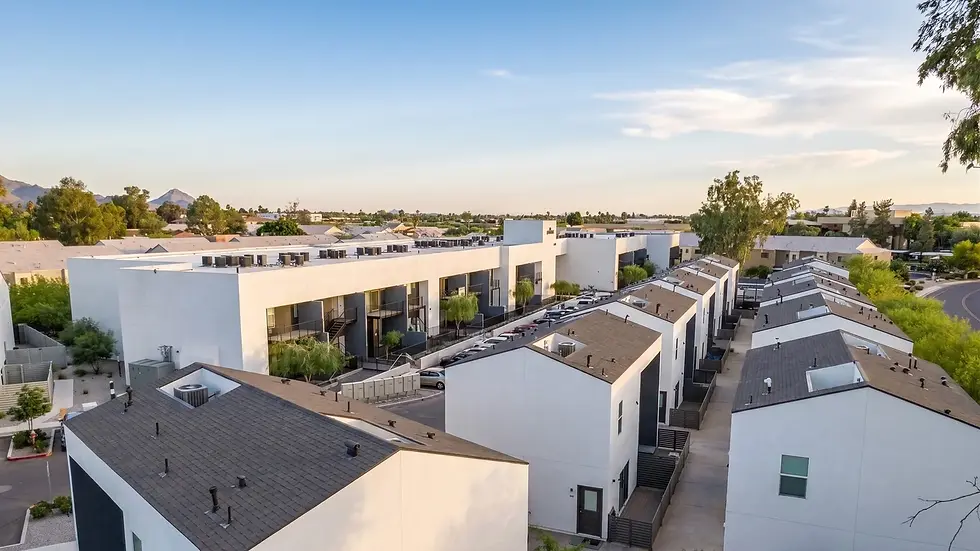
The Landon sits in North Phoenix at 8125 N 23rd Ave, Phoenix, AZ 85021. It leans toward attainable luxury rather than budget: 1 and 2 bedroom loft-style apartments and 1, 2, and 3 bedroom townhomes, with apartments starting at $1,645/month. Approvals are fast, with one-minute application approvals, and applicants with a past eviction are welcome, with each application reviewed individually rather than auto-denied on a single flag.

What you get in the home itself is the part that separates it from the easy-approval budget tier:
Full-size washer and dryer in the unit, daily trash valet, and high-speed wifi
Ceilings from 9 to 11 feet depending on the home, solid wood barn doors, and high-end appliances
The Landon Lounge, a pool and sundeck, and a 24/7 fitness center
Gated underground parking with 20-plus EV charging spots
A pet-friendly community with a large dog and walking park right next door
If you want to see the layouts, browse the floor plans or read more about the community. For more space, the townhomes run up to three bedrooms. To find out where you stand, the fastest route is a short call to the leasing team at 480-572-0006, or set up a tour at thelandon.life.
Easy-approval budget unit vs. flexible-screening community
Both can say yes when your history is messy. They are not the same deal. This is the trade-off in one view.
What you compare | Easy-approval budget unit | Flexible-screening quality community |
|---|---|---|
Why approval is easy | Soft demand, loose standards | Deliberate individualized review |
The home itself | Often dated, deferred upkeep | Modern finishes, full amenities |
Income from benefits or a voucher | Varies by landlord | Welcomed as lawful income |
Likely extra ask | Few, but fewer protections | Larger deposit or a co-signer |
Rent level | Low, but you pay in condition | Closer to market for the area |
Best fit | Lowest possible upfront cost | A real home you'll want to stay in |
What to look for (and what to walk away from)
A few green flags worth seeking out: written criteria available before you apply, a clear deposit number rather than a vague "it depends," and a leasing team that will give you a straight answer on the phone. The right to dispute an error in your screening report is also yours by law, so a community that mentions it is a good sign.
The red flags are louder. Be wary of anyone promising approval no matter what, or advertising that they skip screening entirely while still charging steep fees, since that combination is often a sign of a deceptive operation rather than a genuine second chance. Pressure tactics, refusal to put terms in writing, and deposits that seem designed to be kept are all reasons to walk.
Frequently asked questions
Are second chance apartments legit, or a scam?
The category is legitimate and common. Individualized screening is a real and HUD-encouraged practice. The scams hide at the edges: watch for promises that you will be approved no matter what, large non-refundable fees with nothing in writing, or pressure to pay before you have seen a lease. A real second chance community will share its written criteria and give you a clear deposit figure up front.
How long does an eviction stay on your record?
Eviction filings are public court records and commonly surface on tenant screening reports for about seven years, depending on the screening company and state. The more useful question is recency. A dismissed, settled, or old case should carry far less weight than a recent one, and many communities, including The Landon, review each filing in context rather than treating its existence as an automatic no.
Will a higher deposit actually get me approved?
Often, yes. A larger or additional security deposit is the single most common way a community offsets the risk of a thin credit file or an older issue. It does not promise approval on its own, but paired with steady income it frequently moves a borderline application into the yes column. Always get the deposit terms in writing before you pay.
Do second chance apartments cost more than regular ones?
Sometimes, and usually up front rather than in the monthly rent. The added cost tends to show up as a higher deposit, a guarantor fee if you use a service, or non-refundable application fees. Budget easy-approval units can be cheaper monthly but cost you in condition and upkeep. Quality communities with flexible screening usually charge close to normal market rent for their area.
Can I get approved with no rental history at all?
Yes. No rental history is not a strike against you, it is simply an absence of data, and reviewers fill that gap other ways. Proof of steady income, a co-signer or guarantor, and a slightly larger deposit are the usual bridges for first-time renters. A short note explaining your situation helps a human reviewer understand the file.
Does income from benefits or housing assistance count toward approval?
Yes, lawful income counts, and in Phoenix it must. The city's Human Relations Ordinance makes source of income a protected class, so benefits, Social Security, disability, child support, and housing assistance cannot be treated as worth less than a paycheck. Bring an award or benefits letter as your proof of income, just as you would bring pay stubs.
What is the fastest way to find out if I qualify somewhere?
Call and ask before you apply. A two-minute conversation about your income and your history will usually tell you whether a community is a realistic fit, which saves you the application fee at places that would auto-reject. Asking for the written rental criteria up front does the same thing in writing.
*Equal Housing Opportunity. The Landon is an equal housing opportunity provider. We do not discriminate on the basis of race, color, national origin, religion, sex, familial status, disability, sexual orientation, gender identity or expression, or source of income, in accordance with the federal Fair Housing Act and the City of Phoenix Human Relations Ordinance. Every applicant is evaluated individually under the same written criteria.*